
Boxing Ring
BoomBit GamesSports
4.6830.00 Reviews
- Version
- 2.3.5
- Installs
- 1.00M
- Age Rating
- Teen
Screenshots
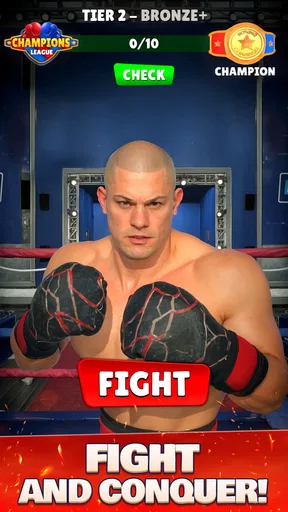


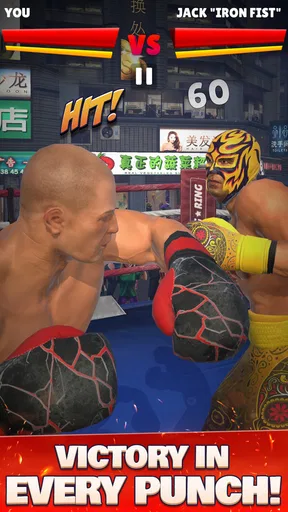
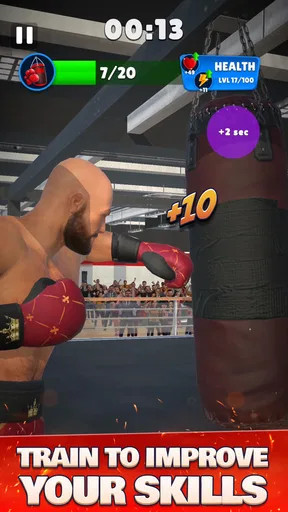
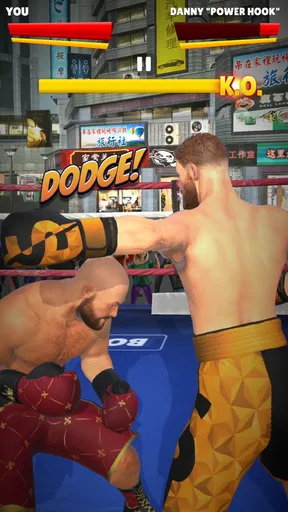
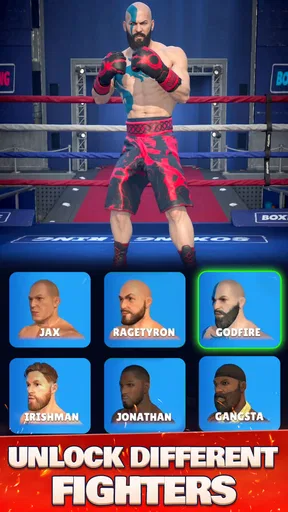
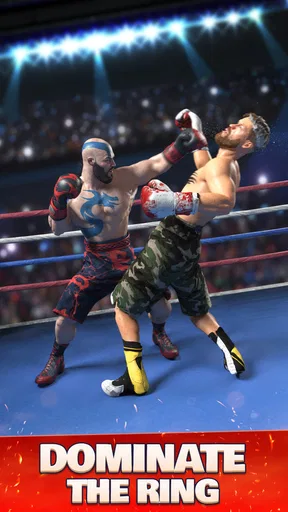
Our Review of Boxing Ring
 Analysis by Appyee
I spent time with Boxing Ring, a sports game from BoomBit Games that keeps its focus on one clear fantasy: stepping into the ring and working toward championship status. It is free to start, rated Teen, and available for devices running Android 7.0 or later. That combination makes it easy to try, but the real question is whether its boxing loop gives you enough reason to keep returning after the first few bouts.
My short answer is that it works best as a quick, accessible boxing game rather than a deep simulation. I enjoyed the immediate sense of action and the simple goal structure, especially when I wanted a short session instead of a long career mode. At the same time, players looking for detailed footwork, realistic judging, or the strategic depth of a dedicated console boxing title should keep their expectations in check.
How the first fights establish the goal
The opening appeal is easy to understand. You enter a boxing setting, face opponents, and try to become the ultimate champion of the ring. That broad objective gives each early match a useful purpose: you are not simply tapping through disconnected rounds, but working toward a recognizable sporting ambition.
I found that clarity helpful because boxing games can become confusing when they introduce too many systems before the player has learned the basic rhythm. Here, the central fantasy does most of the early work. I could concentrate on reading the opponent, choosing when to attack, and avoiding the feeling that I was managing a spreadsheet rather than fighting.
The early goals are especially suitable for casual players who may only have a few minutes available. A quick match can feel complete on its own, while the larger championship idea gives the next session a reason to exist. This is a good fit for a commute, a short break, or a relaxed evening when I want something more active than a puzzle but less demanding than a full sports simulation.
One useful habit is to treat the first encounters as practice for timing rather than as races to finish. New players often throw attacks whenever an opening appears, but boxing games become more enjoyable when you notice the difference between a genuine chance and a trap. I had better results when I waited for a clear moment instead of trying to stay aggressive every second.
That approach also reveals one of the game’s limitations. If you want a detailed training plan, a large roster of distinct fighting styles, or a long narrative about a boxer’s personal life, this is not the experience I would choose first. Its strength is the direct ring encounter, not storytelling or a highly elaborate sporting career.
What makes the early loop approachable
The game’s sports identity is immediately understandable even if you are not a boxing fan. You do not need specialist knowledge of real-world divisions or championship history to appreciate the basic tension between attacking and protecting yourself. That low barrier is one reason the title has reached more than a million installs and holds an average rating of 4.6 from around seven thousand ratings.
Those figures do not guarantee that every player will enjoy it, but they do reflect a game that has attracted a substantial audience. In my experience, the appeal comes from how quickly the ring scenario communicates its purpose. I did not need a long explanation to understand what I was trying to accomplish in a match.
For a friend asking whether to install it, I would say this: start if you like short sports sessions and the satisfaction of gradually pushing toward a visible goal. Skip it if you need a fully realistic boxing simulator from the first minute. The game is more inviting than technical, and that distinction matters.
Progress signals and the feeling of moving forward
A good mobile sports game needs to show progress clearly. Without that feedback, individual fights can feel disposable. Boxing Ring benefits from the simple promise that each successful bout contributes to a larger climb. Even when a match is brief, the championship framing helps it feel like part of a journey.
I paid attention to how often the game gave me a reason to think about the next encounter. The strongest progress signal is not a complicated menu; it is the changing sense of opposition. As the challenge rises, a win feels more meaningful because it reflects an improvement in how I approached the fight, not just the completion of another identical task.
This is where personal discipline makes a difference. Instead of immediately replaying a difficult encounter with the same frantic approach, I found it more useful to identify one mistake. Sometimes that meant attacking too early. Sometimes it meant failing to protect myself after a successful exchange. Turning each loss into one small adjustment made the progression feel more active and less like repeated trial and error.
A practical tip is to use a short mental checklist after every difficult round: did I lose because I was too aggressive, too passive, or simply mistimed my response? That question gives the game more strategic texture than its straightforward presentation might suggest. It also prevents the common mobile-game habit of repeating a level without changing anything.
The progress structure is better for players who enjoy immediate goals than for those who need extensive customization. I did not approach it expecting to build a boxer in the same way I might develop a character in a role-playing game. The attraction is the next contest and the next step toward becoming champion, not an enormous collection of management decisions.
The free entry point helps with experimentation. You can see whether the ring action suits you before committing money, although optional purchases range from $0.99 to $99.99 per item. I recommend deciding early what kind of player you are. If you are comfortable treating purchases as optional conveniences or extras, the free starting point is appealing. If you dislike any game that places paid items near a progression loop, you may find the retention design less comfortable.
How to judge progress without chasing every reward
My advice is to focus on performance improvements rather than trying to extract maximum value from every available reward or purchase opportunity. The most satisfying advancement came when I won because I understood the fight better. Spending money may appeal to players who want to accelerate their experience, but it should not replace learning the rhythm of the matches.
This is also why I would avoid playing for too long in one sitting. Short sessions make each victory easier to appreciate. Long sessions can turn a close loss into a frustrating loop, particularly when I kept trying the same response without giving myself time to reset. The game works best when progression remains a series of manageable goals rather than an obligation to grind.
Difficulty, pacing, and the point where patience matters
The difficulty curve is important in a boxing game because the basic actions are easy to understand, but success depends on using them at the right time. Boxing Ring presents a gentle entry into that idea. Early encounters let you become familiar with the pace, while later fights ask for more attention and better decisions.
I liked that the challenge encouraged me to stop treating every opponent as a target that should be attacked immediately. The more demanding bouts rewarded patience. Waiting for a safer opening, maintaining awareness after an attack, and resisting panic when the opponent gained momentum all became more valuable than simply acting faster.
That said, the difficulty can feel more noticeable when you are playing casually or while distracted. This is not a game I would recommend for half-attention if you want consistent results. A few seconds of poor timing can change the direction of a fight, and mobile controls are less forgiving when your focus is divided between the screen and something else.
For everyday use, I found the best routine was to play one or two bouts during a break, then stop even if the last result was disappointing. That kept the challenge motivating. When I continued immediately after a frustrating loss, I was more likely to rush, make the same mistake, and blame the game for a problem caused by my own impatience.
The pacing also affects who should skip this title. Players who want a calm, turn-based sports experience may find the ring tension too reactive. On the other hand, anyone searching for a quick competitive mood without the time commitment of a full simulation should find the format approachable.
Where the challenge feels fair and where it can wear thin
The fair part of the challenge comes from learning to respond rather than simply hoping for a lucky result. When I adjusted my timing and became more selective, victories felt earned. That kind of feedback is valuable because it gives the player a clear area to improve.
The weaker side is the possibility of repetition. A direct boxing loop can be enjoyable for a while, but it needs meaningful variation to remain fresh over a long period. If you prefer sports games with extensive team building, season management, or deep tactical planning, you may eventually want a different option. Boxing Ring is strongest when you value the immediate match more than a large ecosystem around it.
Another trade-off is accessibility versus depth. Its straightforward presentation helps newcomers enter quickly, but experienced boxing-game players may want more control and nuance than the mobile format provides. I see that as a design choice rather than a flaw in every situation, but it should guide your expectations before you download it.
Retention pressure and the role of optional spending
Like many free mobile games, Boxing Ring has to persuade players to return. The championship objective is the main retention tool: after a win, there is a natural temptation to see how far the next fight can take you. That is a healthy kind of motivation when the player is returning because the matches remain enjoyable.
The pressure becomes less appealing when progress starts to feel like something that should be accelerated rather than experienced. With in-app purchases priced from $0.99 to $99.99 per item, I would approach the store carefully and decide on a personal limit before buying anything. The free download is enough to evaluate the core appeal, so there is no need to spend immediately just to discover whether the combat suits you.
This is one of the most important practical points for parents and younger players. The Teen content rating means families should review the game’s purchase setup and decide whether device-level spending controls are appropriate. The rating also signals that this is not positioned as a children’s game, even though the basic idea is easy to understand.
I would also recommend turning the game into a deliberate routine rather than opening it whenever a notification or reward prompt appears. Play when you actually want a boxing match. That small change keeps the experience centered on the sport instead of on the pressure to maintain a streak or claim every available incentive.
The game’s retention works best for players who enjoy incremental goals. I liked having a reason to return after a successful session, but I would not describe it as an endless substitute for a full console career mode. Its loop is more suitable for regular short visits than for a single huge campaign played from beginning to end.
Who gets the most value from the free version
The free version makes the most sense for someone who wants to test the ring action, enjoys short sessions, and is willing to progress at a comfortable pace. It is also a reasonable choice for a casual sports fan who does not want to learn a complex control system before having fun.
I would be more cautious if you are highly sensitive to in-app purchases or if you measure value by the amount of long-term content rather than by the quality of quick matches. In that case, a paid boxing game or a broader sports title may offer a clearer upfront exchange, even if it costs more at the beginning.
There is also a useful middle ground: install it, play enough matches to understand the difficulty curve, and then decide whether the championship climb is holding your attention. That is a better test than judging the game solely from its store summary or from one impressive early fight.
How it compares with other sports and boxing choices
Compared with a realistic boxing simulator, Boxing Ring is easier to approach and less intimidating. You can begin with the central action without first learning a large set of technical systems. The trade-off is that players who want authentic ring strategy, detailed fighter statistics, or extensive career management may find the experience too streamlined.
Compared with general sports games, it has a narrower identity. That focus is a strength when I want boxing specifically, because the game does not dilute the mood with unrelated sports. It is a weakness if I want variety from one app, such as switching between football, basketball, racing, and boxing in the same session.
Compared with a traditional premium game, the free entry point is convenient but the purchase structure requires more self-control. A paid alternative may feel more predictable for someone who dislikes optional spending, while this game is more attractive to players who want to try before deciding whether it deserves a place on their device.
Compared with a purely casual tap-based game, the boxing theme gives my decisions more context. I am not just clearing abstract stages; I am trying to manage a fight and move toward a championship goal. That context is enough to make the wins more memorable, even when the overall structure remains relatively direct.
My recommendation depends on the kind of challenge you want. Choose this game for quick ring encounters, a clear climb, and an accessible sports experience. Choose something else if your priority is simulation accuracy, a deep story, broad multiplayer variety, or a completely purchase-free structure.
My verdict after following the championship climb
Boxing Ring succeeds because it understands the value of a simple objective. The early goal is obvious, the progress direction is easy to follow, and the rising challenge gives individual fights more weight. I enjoyed it most when I treated each bout as a small lesson in timing rather than as a race to unlock everything as quickly as possible.
BoomBit Games has made a sports game that is approachable without pretending to be a full boxing simulation. Its average rating of 4.6 and audience of over a million installs suggest that the straightforward ring concept has broad appeal, and I can see why. The game is quick to understand, easy to sample for free, and capable of creating satisfying moments when patience turns a difficult matchup around.
It is not the right pick for everyone. The narrow focus may become repetitive for players who need a large career structure, and the in-app purchase range means cautious users should pay attention to spending controls. Players seeking technical realism or a premium, fixed-price experience may be happier elsewhere.
For me, the final verdict is positive with clear limits. I would recommend it to a friend who wants a compact boxing game for short sessions and enjoys working through a visible series of challenges. I would tell that friend to play with a spending limit, take breaks after frustrating losses, and judge progress by improved decisions rather than by how quickly the climb moves.
With version 2.3.5 installed, the game feels like a suitable choice for Android users who meet the minimum system requirement and want a free sports title with a Teen rating. If you want an approachable boxing loop with a championship goal, Boxing Ring is worth trying; if you want a complete boxing simulation, treat it as a lighter alternative rather than a replacement.
Verdict
Strengths of Boxing Ring
- Simple controls make matches easy to pick up for new players.
- Quick bouts are convenient for short gaming sessions.
- Punch animations give fights a satisfying arcade feel.
- Offline play is useful when you have no internet connection.
- Lightweight design should run smoothly on many older devices.
Limitations of Boxing Ring
- Gameplay can become repetitive after several matches.
- Limited fighter variety may reduce long-term replay value.
- Difficulty balance may feel uneven in later fights.
- Ads can interrupt the experience for free players.
- The game may offer little depth for serious boxing fans.
Other Releases by BoomBit Games
View All
Boss Fight
Sports4.2

Darts Club: PvP Multiplayer
Sports4.5

Hunt Royale: Action RPG Battle
Action4.3

Bowling Club: Realistic 3D PvP
Sports4.5
Similar Picks in This Category
View All
8 Ball Pool
Miniclip.com4.8

Pooking - Billiards City
AIM TOP GAME TECHNOLOGY LIMITED - pool4.6

Carrom Pool: Disc Game
Miniclip.com4.4

EA SPORTS FC Soccer Mobile 26
ELECTRONIC ARTS4.6

World Soccer League
mobirix4.3

Soccer Cup 2026: Football Game
INLOGIC SPORTS - football tennis golf soccer4.3
Frequently Asked Questions
What is Boxing Ring, and what can I do in the game?
Boxing Ring is a boxing-themed game focused on entering the ring, fighting opponents, and improving your performance through matches. Depending on the version and available modes, you may be able to train your fighter, upgrade abilities, unlock new challenges, and compete through progressively harder bouts. The gameplay is generally designed for quick sessions, making it suitable for players who enjoy simple fighting mechanics and sports-inspired action.
Is Boxing Ring suitable for beginners who have never played a boxing game?
Yes, Boxing Ring is generally accessible to beginners because its core concept is easy to understand: control your fighter, avoid incoming attacks, and land punches at the right moment. New players may need a little time to learn the timing of blocking, dodging, and attacking, especially against stronger opponents. Starting with easier matches and practicing regularly can make the controls and combat rhythm much more comfortable.
Does Boxing Ring require an internet connection to play?
The connection requirements may depend on the specific version of Boxing Ring and the features you want to use. Basic or single-player matches may work offline after installation, while online competitions, advertisements, cloud saving, leaderboards, or other connected features can require internet access. Before downloading, check the store description and test the game in offline mode if playing without mobile data is important to you.
Are there in-app purchases or advertisements in Boxing Ring?
Boxing Ring may include advertisements or optional in-app purchases, as is common with free mobile games. Ads can sometimes appear between matches or when claiming bonuses, while purchases may provide virtual currency, upgrades, cosmetic items, or other conveniences. The exact pricing and availability can vary by platform and region, so review the official store listing before installing and avoid purchases unless you are comfortable with the terms.
Which devices are compatible with Boxing Ring, and is it safe to download?
Compatibility depends on whether you are using Android or iOS, as well as your device’s operating system version, storage space, and hardware performance. Check the official Google Play or App Store listing for the current requirements before downloading. For safety, install Boxing Ring only from an official store, review the listed developer, permissions, ratings, and recent user feedback, and keep your device software updated.
Play our best games!


